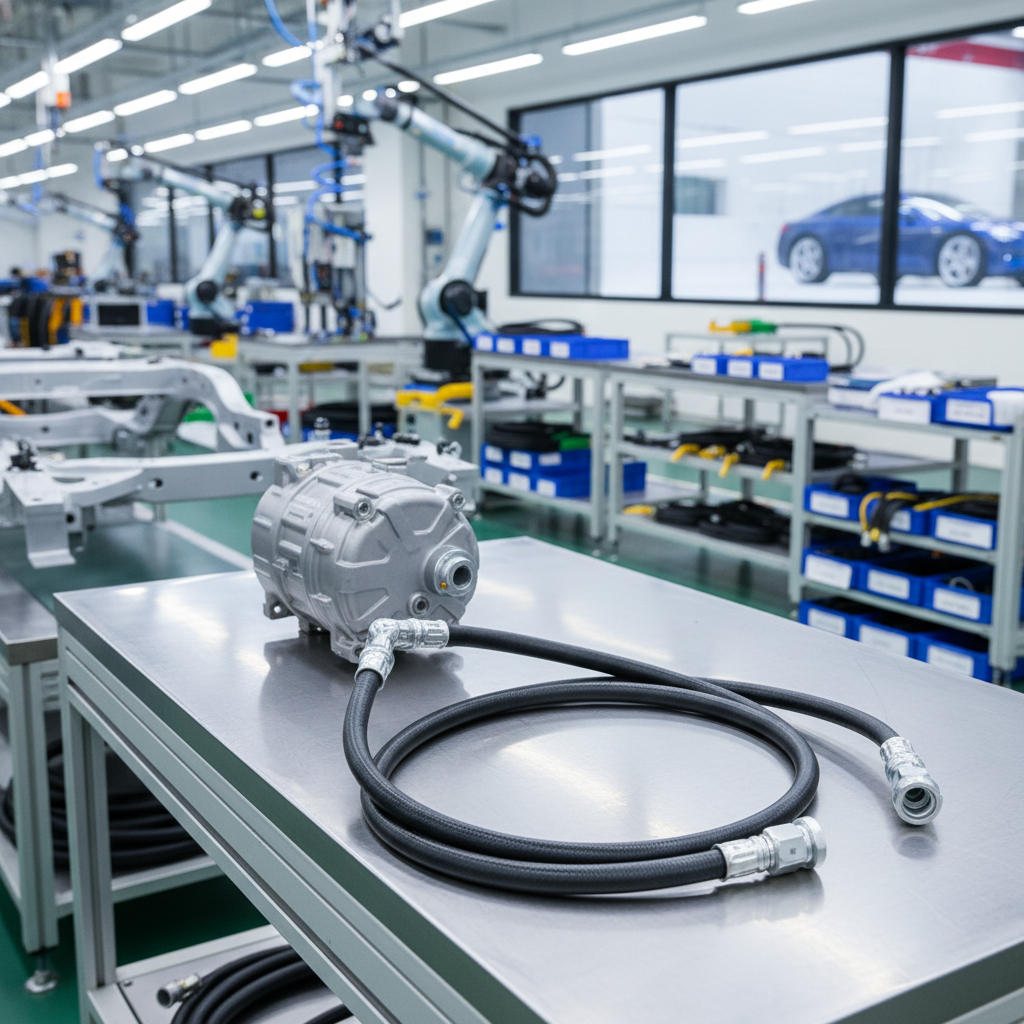
Honestly, the brake hose market…it’s getting wild. Everyone's chasing higher pressure ratings, lighter weight, and this whole push for “smart” hoses with embedded sensors. Seems a little much, if you ask me. I was at a factory in Ningbo last month, and they were showing off a hose with a chip in it that supposedly alerts you to wear and tear. Look, I’ve been wrestling with hoses for twenty years, and I can feel when one’s getting dodgy. These engineers…they think everything needs a sensor.
But seriously, the demand is up. Global vehicle production is recovering, and even with the shift to electric, you still need brake lines. The bigger problem, though, isn’t making the hoses stronger, it’s making them consistently good. You'd think it'd be simple, right? A tube with some reinforcement. But consistency...that's where the money goes.
And, you know, these new regulations…the GTR 13 requirements are a headache. More testing, stricter standards…which is good, I guess, but it adds cost and complexity. It’s all about burst pressure, fatigue life, and chemical resistance now. We're spending a lot more time just proving we're not going to explode on the road, instead of making something better.
Industry Trends & Design Pitfalls
To be honest, one of the biggest design traps I see is over-engineering. Guys get obsessed with using the newest, fanciest materials when a good, reliable rubber compound and some quality braid will do the job just as well. Have you noticed that? I saw a design once with five layers of reinforcement – five! – when three would have been plenty. It made the hose stiff as a board and nearly impossible to route.
Another thing: the fittings. So many companies cheap out on the fittings. The hose can be perfect, but if the fitting fails, it’s all for nothing. That’s where you really need to spend the money. It’s simple, really.
Material Deep Dive: What We Actually Use
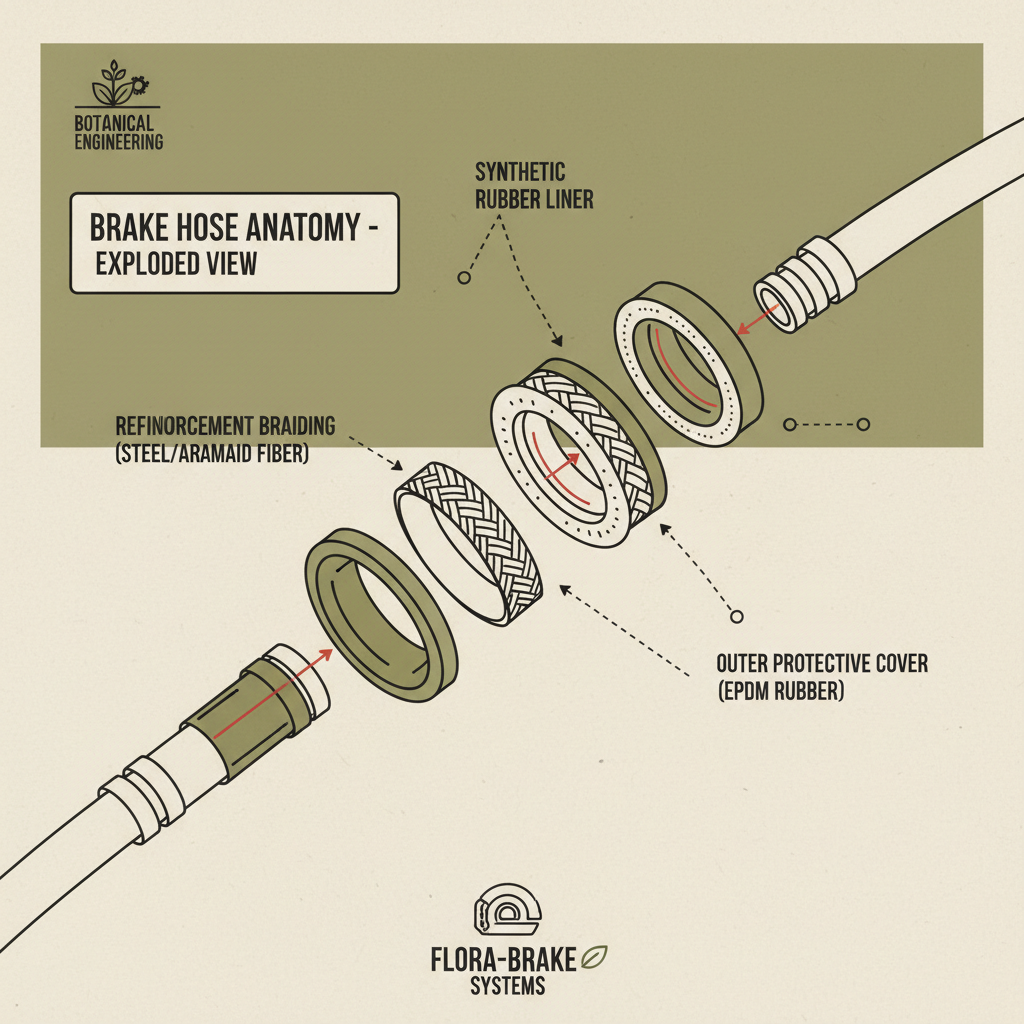
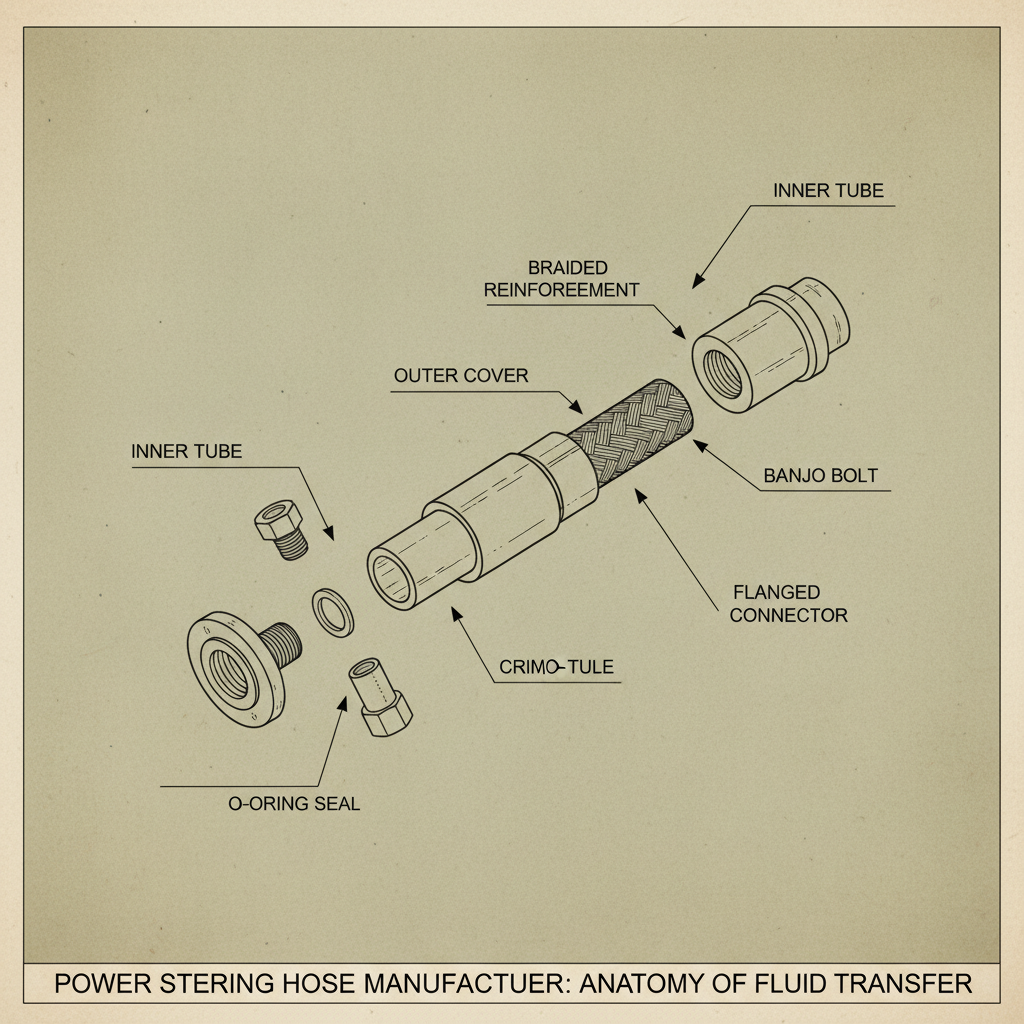
Okay, so let’s talk materials. Most of our hoses are made with a synthetic rubber, usually a blend of EPDM and nitrile. EPDM gives you good heat resistance and weatherability, and the nitrile adds strength and oil resistance. It smells…distinctive. Not pleasant, but you learn to live with it. Strangely enough, that smell is a good sign – it means the nitrile content is decent.
Then you've got the reinforcement. Usually, it's a high-tensile steel wire braid. The quality of the steel is crucial. You want something that’s strong, but also flexible. Cheaper steel is brittle and prone to cracking. We also use textiles – polyester and nylon – for some applications, especially for lower-pressure lines. It's not as strong, but it's lighter and easier to work with.
And the cover? That's typically a chlorinated polyolefin. It protects the hose from abrasion, UV, and chemicals. It also needs to be smooth so it doesn't snag on anything. I encountered a batch of cover material at a supplier in Zhejiang last time that was way too sticky. A nightmare.
Real-World Testing: Beyond the Lab
Lab testing is important, sure. Burst pressure, fatigue testing, chemical resistance… we do all that. But it doesn't tell you everything. I think the real testing happens out in the field. We send hoses to fleet operators, to racing teams, to guys who drive hard and put them through their paces. That's where you find the weaknesses.
We also do what we call “abuse testing.” Basically, we try to break the hoses in every way imaginable. We bend them, twist them, subject them to extreme temperatures, drench them in oil and coolant…you name it. Sounds crazy, but it’s the best way to identify potential problems before they hit the road.
One of the things we've started doing is impact testing. Simulating a rock strike or debris hitting the hose. That’s a big one, especially for off-road vehicles.
How Users Really Use Brake Hoses
This is where things get interesting. Engineers design these hoses thinking they'll be installed perfectly, routed smoothly, and never subjected to any stress. Yeah, right. In the real world, guys are cramming them into tight spaces, bending them at sharp angles, and sometimes even stepping on them.
I've seen mechanics use a hammer to get a hose to fit. A hammer! And they often don't bother to use the proper tools for tightening the fittings. They just crank them down as hard as they can. It’s… disheartening.
brake hose manufacturer Performance Metrics
Advantages & The Ugly Truth
Look, a good brake hose is a lifesaver. It’s a critical safety component, and when it works, you don't even think about it. That's the biggest advantage. Reliability. But here's the thing: they all look the same. It’s hard for a mechanic, or a consumer, to tell the difference between a high-quality hose and a cheap one. That's why brand reputation and consistent quality control are so important.
The downside? Cost. Good hoses aren't cheap. And if you're trying to compete on price, it's tempting to cut corners. Plus, they're a maintenance item. They degrade over time, especially in harsh environments. People forget about them until something goes wrong.
Customization: It's More Common Than You Think
You'd be surprised how often we get requests for custom hoses. Different lengths, different fittings, different colors…it happens. One guy, a classic car restorer, wanted a batch of hoses with stainless steel braid for a vintage Jaguar. He wanted them to look period-correct, but also perform like modern hoses. It was a pain to tool up for a small run like that, but he was willing to pay for it.
We can also customize the fittings. Different thread sizes, different angles… whatever the customer needs. It adds to the cost, of course, but sometimes it's the only way to get the job done.
A Customer Story & Material Comparison
Last month, this small boss in Shenzhen who makes smart home devices – a real hustler, always looking for an edge – insisted on changing the interface on our standard hydraulic hose to . ! He said it was "more modern" and "better for branding." I tried to explain that hydraulic fittings don’t really benefit from a connector, but he wouldn’t listen. The result? He spent a fortune on custom tooling and ended up with a hose that was more complicated and less reliable than the original.
Anyway, I think it’s important to remember that sometimes, sticking with what works is the best option.
Here's a quick comparison of the materials we use. Roughly drawn, like I’d sketch it on a clipboard at the factory.
brake hose manufacturer Material Overview
| Material |
Key Properties |
Cost (Relative) |
Typical Application |
| EPDM Rubber |
Heat resistance, weatherability, flexibility |
Low |
Inner hose layer |
| Nitrile Rubber |
Oil resistance, strength, abrasion resistance |
Medium |
Inner hose layer (blend with EPDM) |
| Steel Wire Braid |
High tensile strength, durability |
Medium-High |
Reinforcement layer |
| Polyester Textile |
Flexibility, lightweight |
Low |
Reinforcement layer (low pressure) |
| Chlorinated Polyolefin |
Abrasion resistance, UV protection |
Medium |
Outer cover |
| Stainless Steel Braid |
Corrosion resistance, aesthetic appeal |
High |
Outer cover (performance/appearance) |
FAQS
Honestly, it's not tightening the fittings properly. They either over-tighten them and strip the threads, or they under-tighten them and risk a leak. You need the right torque wrench and you need to know the proper torque specification. I’ve seen it all. It’s a simple thing, but so many get it wrong.
It depends on driving conditions, but a good rule of thumb is every 5-7 years, or sooner if you notice any cracks, blisters, or leaks. If you live in an area with harsh winters or drive a lot of miles, you should check them more frequently. They're a wear item, just like tires.
For performance applications, absolutely. They expand less under pressure than rubber hoses, which gives you a firmer pedal feel. But for everyday driving, the difference is minimal. It’s mostly about aesthetics at that point. I think it’s only worth it if you're tracking the car or driving aggressively.
DOT approval means the hose has met certain safety standards set by the Department of Transportation. It's a good indicator of quality, but it doesn’t guarantee the hose is perfect. It just means it’s been tested and meets the minimum requirements. I’ve seen DOT-approved hoses fail, and I’ve seen non-DOT-approved hoses last for years.
Absolutely not. Never repair a brake hose. It's a safety hazard. Replace it. Period. There’s no excuse for trying to patch a brake hose. It's simply not worth the risk. You’re putting your life, and the lives of others, in danger.
Oh man… this guy wanted a brake hose made out of gold-plated copper. He was building some sort of show car, and he wanted everything to be blinged out. I told him it was a terrible idea – copper is not a suitable material for brake hoses, and the gold plating would just flake off. But he insisted. I told him, "Don't come crying to me when it fails."
Conclusion
So, what does all this boil down to? Brake hoses are a seemingly simple component, but they play a critical role in vehicle safety. The industry is moving towards higher performance, stricter standards, and more customization, but at the end of the day, the most important thing is reliability. Choosing the right materials, ensuring consistent quality control, and proper installation are key to keeping people safe on the road.
Ultimately, whether this thing works or not, the worker will know the moment he tightens the screw. And if he's a good mechanic, he'll know if something doesn't feel right. That’s all that matters. If you're looking for a reliable brake hose manufacturer, you know where to find us.