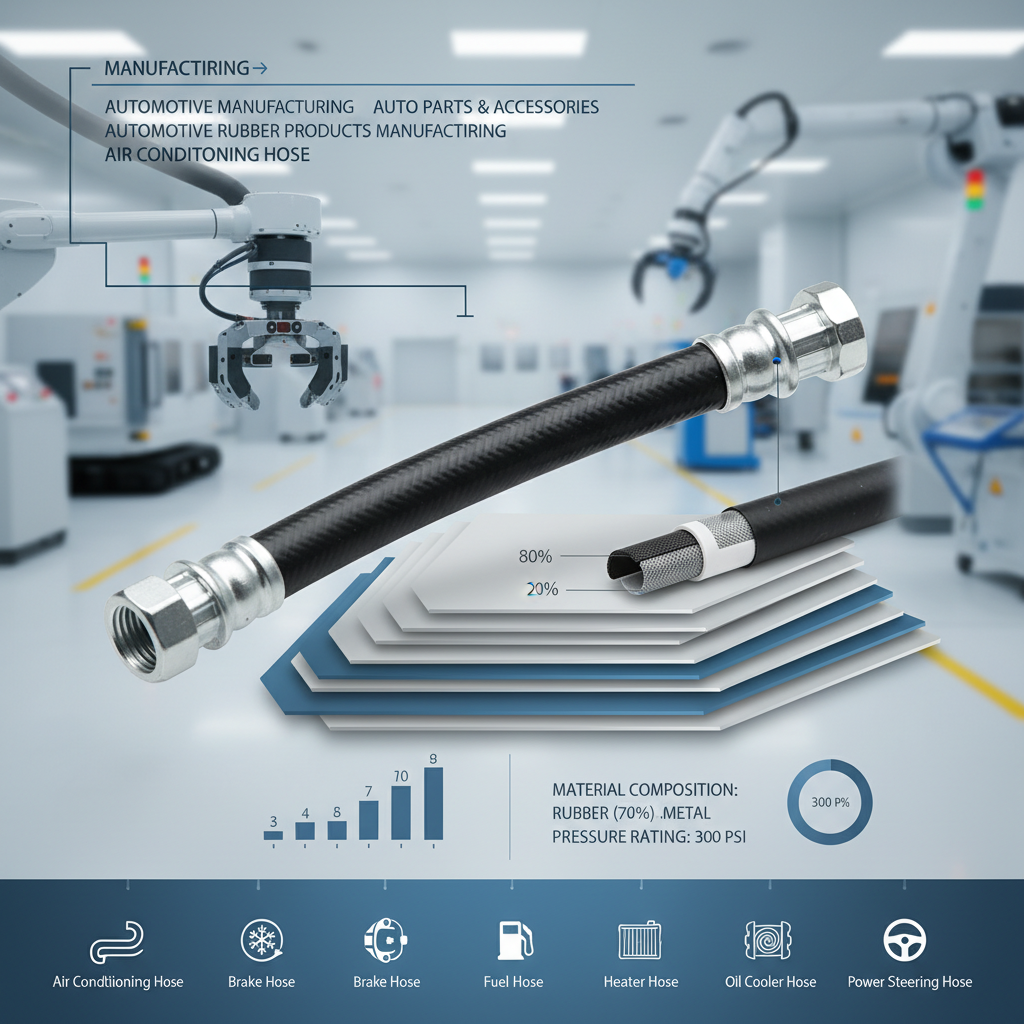
The efficiency of a vehicle's climate control system relies heavily on the integrity of its conduits, specifically the car ac compressor hose. These specialized components are engineered to transport high-pressure refrigerants between the compressor and other system elements, ensuring that the heat exchange process occurs seamlessly to keep the cabin cool. Without a high-quality hose, the entire AC cycle is compromised, leading to refrigerant leaks and system failure.
Globally, the demand for high-performance rubber automotive components has surged as extreme weather patterns become more common, making air conditioning a necessity rather than a luxury. The car ac compressor hose must withstand intense thermal cycling and vibration, requiring advanced materials that prevent permeation and resist chemical degradation from various refrigerant types.
Understanding the technical specifications and maintenance requirements of these hoses is critical for automotive engineers and fleet managers alike. By focusing on material durability and precise fitting, manufacturers can reduce the frequency of costly repairs and improve the overall lifespan of the vehicle's HVAC system, ensuring passenger comfort and safety in any environment.
Global Industry Standards for Car AC Compressor Hose
The automotive industry adheres to rigorous international standards, such as ISO and SAE, to ensure that every car ac compressor hose can handle the extreme pressure fluctuations associated with modern refrigerants. With the global shift toward R-1234yf, which is more environmentally friendly but requires different material compatibility, the manufacturing process has evolved to include advanced barrier layers that prevent gas leakage.
Failure to meet these standards often results in catastrophic system failure or environmental hazards due to refrigerant escape. Consequently, manufacturers are investing in precision molding and reinforced braiding to ensure that hoses can withstand the harsh under-hood environments of modern high-efficiency engines.
Engineering Definition and Functional Role
In technical terms, a car ac compressor hose is a flexible, high-pressure conduit designed to move refrigerant from the compressor to the condenser. Unlike standard rubber hoses, these are typically composite structures consisting of an inner liner for chemical resistance, a reinforcement layer for pressure containment, and an outer cover to protect against abrasion and heat.
The functional role of this hose is critical because the compressor acts as the "heart" of the AC system, pumping refrigerant at high pressures. Any weakness in the hose wall or a failure at the crimped fitting can lead to an immediate loss of cooling capacity and potentially damage the compressor itself due to lubrication loss.
Modern automotive design integrates these hoses into complex routing paths to avoid contact with hot engine manifolds. This necessitates a balance between flexibility—to allow for engine vibration—and rigidity—to maintain structural integrity under pressure.
Core Components and Material Durability
The durability of a car ac compressor hose depends heavily on the EPDM (Ethylene Propylene Diene Monomer) or Nitrile rubber used in its construction. These materials are chosen for their ability to resist ozone, heat, and the chemical properties of PAG oils used for compressor lubrication.
Reinforcement is the second core component, often utilizing high-tensile steel wire or synthetic textile braiding. This layer ensures that the car ac compressor hose does not expand or burst when the AC system reaches peak operating pressure during extreme summer temperatures.
Finally, the fitting interfaces—typically aluminum or stainless steel—must be precision-engineered to create a leak-proof seal. The transition from the flexible rubber of the car ac compressor hose to the rigid metal fitting is a common point of failure, making the quality of the crimping process paramount.
Performance Metrics and Efficiency Analysis
Evaluating the performance of a car ac compressor hose involves measuring its permeability rate and its burst pressure threshold. A high-efficiency hose minimizes the "slip" of refrigerant molecules through the rubber wall, which maintains system pressure and reduces the need for frequent refrigerant top-ups.
Furthermore, the thermal conductivity of the hose material plays a role in overall system efficiency. While the goal is to transport the hot gas to the condenser, excessive heat loss or gain through the hose walls can slightly alter the compressor's workload and efficiency.
Efficiency Comparison of Car AC Compressor Hose Materials
Real-World Applications and Use Cases
In the passenger vehicle market, the car ac compressor hose is a standard component across all segments, from economy cars to luxury SUVs. In luxury vehicles, these hoses are often routed through sound-dampening conduits to reduce the audible "hiss" of high-pressure refrigerant, enhancing the cabin's acoustic comfort.
Beyond consumer cars, heavy-duty commercial trucks operating in remote industrial zones or desert climates require reinforced car ac compressor hose variants. These vehicles face constant exposure to dust, salt, and extreme heat, meaning the outer cover of the hose must be significantly more resistant to abrasion and chemical attack to prevent premature failure.
Long-Term Value and Reliability Benefits
Investing in a premium car ac compressor hose provides long-term value by drastically reducing the Total Cost of Ownership (TCO). While a cheaper hose might be tempting, the cost of recovering leaked refrigerant and replacing a burnt-out compressor far outweighs the initial savings of a high-quality component.
Reliability also translates directly into driver safety. A sudden failure of the AC system in extreme heat can lead to driver fatigue and reduced concentration. By utilizing hoses with superior thermal stability, manufacturers ensure that the vehicle remains a safe environment for occupants regardless of external conditions.
From a sustainability perspective, a leak-proof car ac compressor hose prevents potent greenhouse gases from entering the atmosphere. This aligns with global environmental goals and reduces the carbon footprint of the automotive lifecycle.
Future Innovations in Hose Technology
The future of the car ac compressor hose is being shaped by the transition to Electric Vehicles (EVs). In EVs, the thermal management system is more complex, often requiring hoses that can handle both refrigerant and coolant in integrated loops to optimize battery temperature.
We are also seeing the introduction of "smart hoses" embedded with micro-sensors. These sensors can detect microscopic pressure drops or material fatigue in the car ac compressor hose before a visible leak occurs, allowing for predictive maintenance through the vehicle's onboard diagnostic system.
Moreover, the industry is moving toward bio-based elastomers to replace petroleum-derived rubber. These new materials promise the same, if not better, resistance to high pressures while being fully biodegradable at the end of the vehicle's life.
Technical Comparison of Car AC Compressor Hose Specifications
| Material Type |
Pressure Capacity |
Temperature Range |
Lifespan Score |
| Standard EPDM |
Moderate (up to 200psi) |
-40°C to 120°C |
6/10 |
| Steel Braided |
High (up to 450psi) |
-40°C to 150°C |
9/10 |
| Nitrile Blend |
Moderate (up to 250psi) |
-30°C to 110°C |
7/10 |
| Fluoropolymer |
Very High (up to 600psi) |
-50°C to 200°C |
10/10 |
| Hybrid Fiber |
High (up to 400psi) |
-40°C to 140°C |
8/10 |
| Eco-Bio Rubber |
Moderate (up to 220psi) |
-30°C to 130°C |
7/10 |
FAQS
Common signs include a visible oily residue on the hose surface, as the refrigerant oil often leaks out with the gas. You may also notice a gradual decrease in cooling efficiency or hear a slight hissing sound when the compressor engages. Professional leak detection using UV dye is the most accurate method for confirming a failure in the car ac compressor hose.
Depending on the vehicle's design, some car ac compressor hoses are sold as complete assemblies with fittings attached. While it is technically possible to replace just the rubber section using specialized crimping tools, replacing the entire assembly is generally recommended to ensure a factory-grade seal and avoid future leaks at the connection points.
Yes, absolutely. Different refrigerants, such as R-134a and the newer R-1234yf, have different chemical properties and require different types of lubricants. A car ac compressor hose designed for R-134a may not have the necessary barrier properties to prevent the permeability of R-1234yf, leading to faster system degradation.
Under normal conditions, a high-quality car ac compressor hose should last 7 to 10 years. However, this lifespan can be shortened by extreme heat, exposure to road salt, or excessive engine vibration. Regular inspections during annual AC services can help identify wear and tear before a total blowout occurs.
Aftermarket hoses can be a safe and cost-effective alternative provided they meet ISO or SAE standards. The key is to ensure the aftermarket car ac compressor hose uses the same grade of rubber and reinforcement as the original. Always check for certifications and warranties to ensure the product can handle the specific pressures of your vehicle's system.
Hardening or brittleness is a sign of "dry rot" or thermal degradation. Over time, the plasticizers in the rubber of the car ac compressor hose evaporate, and the material loses its elasticity. Once a hose becomes brittle, it is highly susceptible to cracking under pressure and should be replaced immediately to prevent a sudden system failure.
Conclusion
The car ac compressor hose may seem like a simple component, but it is an engineering marvel that balances flexibility, pressure resistance, and chemical stability. From its composite material layers to its precision-crimped fittings, every aspect of its design is geared toward maintaining the efficiency of the vehicle's climate control system and ensuring the longevity of the compressor.
As the automotive world shifts toward electric powertrains and sustainable materials, the evolution of these hoses will continue to play a pivotal role in thermal management. For vehicle owners and manufacturers, prioritizing high-grade materials and adhering to strict maintenance schedules is the best way to ensure lasting comfort and environmental responsibility. Visit our website for more professional solutions: www.kemoautohose.com