
Hydraulic Brake Hose: Premium Durability & Safety
Aug . 02, 2025 05:00 Back to list
Hydraulic Brake Hose: Premium Durability & Safety
The global Hydraulic Brake Hose market was valued at approximately USD 2.5 billion in 2023,
with an expected CAGR of 5.7% through 2030, according to Market Research Future.
Key industry drives include increasing vehicle production, rising demand for high-pressure and flexible hoses, and stricter safety regulations (e.g., ISO 6620, SAE J1401). Lightweight, corrosion-resistance, and longer service life lead the innovation trends in Hydraulic Brake Hose design and manufacturing.
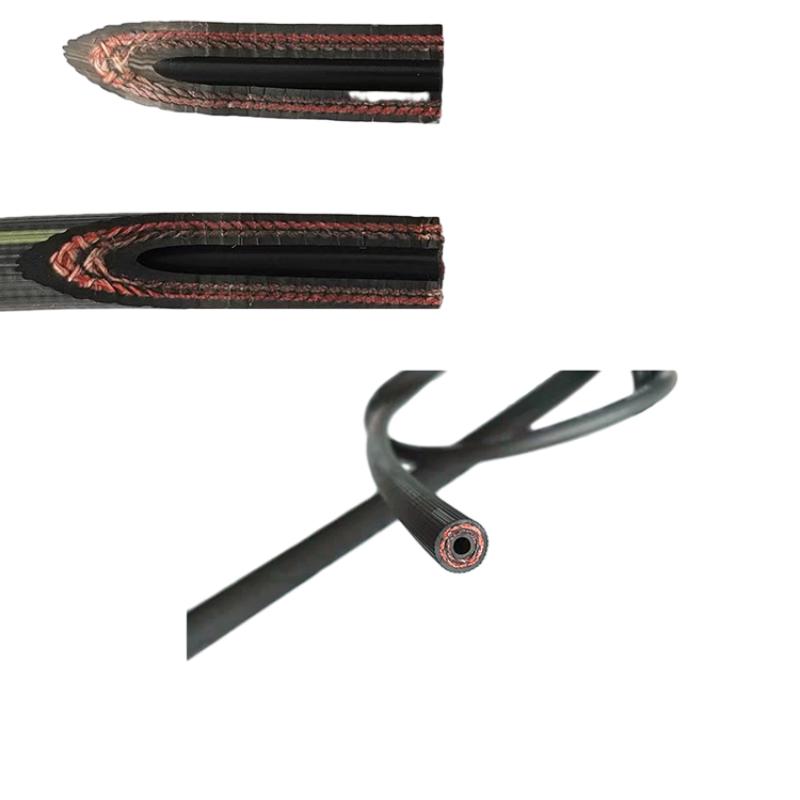
- Provides high burst pressure withstand within hydraulic brake circuits
- Compact routing and excellent flexibility, suitable for mobile equipment
- Demonstrated service life exceeding 300,000 oscillation cycles (as per SAE J1401 test protocol)
The Hydraulic Brake Hose is engineered for demanding brake hydraulic circuits, tested under extreme vibration, pressure, and environmental exposures. Below is a compiled table of critical specifications from leading manufacturers—KEMO, GATES, and EATON—for standard 1/8” ID automotive brake hose:
| Brand | Inner Diameter | Operating Pressure (MPa) | Burst Pressure (MPa) | Temperature Range (°C) | Material | Standard | Service Life (cycles) |
|---|---|---|---|---|---|---|---|
| KEMO | 3.2 mm (1/8”) | 10.5 | 40 | -40 ~ +120 | Synthetic Rubber + Stainless Braid | SAE J1401, ISO 9001 | ≥300,000 |
| GATES | 3.2 mm (1/8”) | 10.3 | 38 | -40 ~ +116 | SBR/EPDM + Steel Wire | SAE J1401 | ≥280,000 |
| EATON | 3.2 mm (1/8”) | 10.0 | 36 | -40 ~ +115 | EPDM + Polyester Yarn | SAE J1401, ISO 6620 | ≥250,000 |
Service Life Comparison: KEMO's hoses have validated cyclic service life exceeding 300,000 cycles, indicating enhanced reliability for critical brake applications.
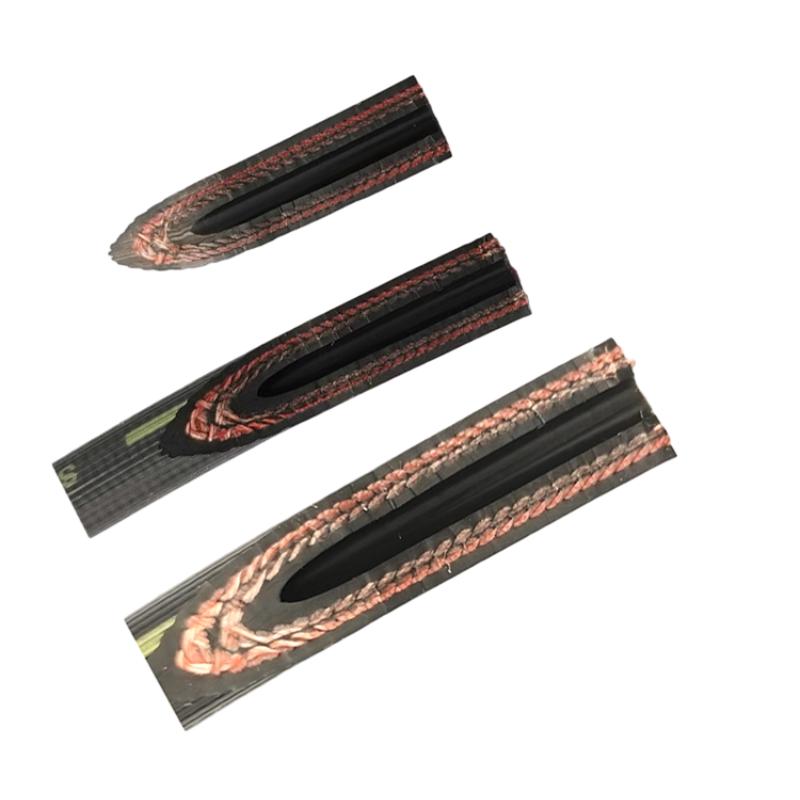
- Inner Tube: Oil-resistant synthetic rubber, e.g., NBR/EPDM
- Reinforcement: High-tensile steel wire or polyester yarn braiding
- Outer Cover: Weather/ozone-resistant synthetic elastomer
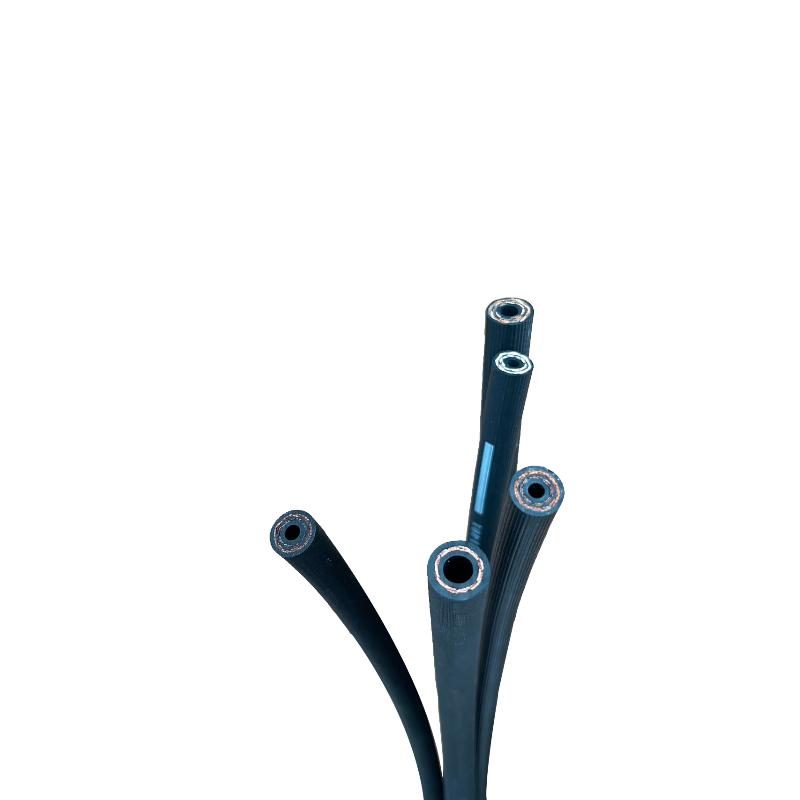
- Materials: Premium oil- and heat-resistant synthetic rubber, high-tensile steel wire, polyester fiber, with optional PTFE lining for extreme compatibility.
- Manufacturing Methods: Precision extrusion (for uniform wall thickness), CNC automatic cutting & fitting, and full wrapping/curing to optimize mechanical strength.
- Testing Standards: All hoses are subjected to ISO 9001 quality management, with batch traceability, SAE J1401 burst test, kink test, and cyclic flex/bend validation (up to 900,000 cycles for custom types).
- Superior Pressure Stability: Multi-layer reinforcement delivers consistent hydraulic transfer even under extreme pressure fluctuations (up to 40 MPa burst).
- Extended Flex Life: Braided construction, compliant with SAE J1401, ensures service cycles vastly exceeding OEM/minimums (proven 5+ years in harsh duty).
- Enhanced Corrosion/Salt Resistance: Stainless steel or anti-ozone cover provides outstanding endurance in aggressive environments (salt spray test: ≥ 96h, ASTM B117).
- Wide Temperature Tolerance: Maintains elasticity between -40°C and +120°C, matching global automotive and industrial standards.
- Precision Assembly: Each hose is cut and crimped to ±0.5mm, with strict end-fitting compatibility ensuring secure, leak-proof installation.
- Regulatory Compliance: Meets or exceeds major international standards: SAE J1401, ISO 6620, DOT FMVSS 106, ECE R90.
| Criteria | KEMO | Other Average Brands |
|---|---|---|
| Pressure Test | 100% in-line, digital logging | Random sampling; manual logging |
| Inner Tube Material | Premium NBR/EPDM | Generic EPDM blend |
| Service Life (cycles) | ≥300,000 (tested) | ~200,000 (claimed) |
| End Fittings | CNC-turned, custom per application | Stamped bulk, few options |
| Certifications | ISO/SAE/ISO9001/ISO14001 | ISO9001 only |
| After-sales Support | 24/7, multi-language, direct engineer consult | Business hours, general service |
- Industry: Petrochemical Metallurgy Automotive Marine
- Customization Options: Bore size (3.2~13mm), length (custom), pressure class, fitting geometry, liner (PTFE, FKM), abrasion-resistant sheathing, branding/logo print.
- Order to Delivery: Rapid prototyping (within 2 days), mass production (under 7-15 business days), 100% tested prior to shipment.
- Third-party Approvals: EN/ISO/SAE/ECE compliance per region, with supporting test certificates and batch documentation.
KEMO supplied tailor-made Hydraulic Brake Hose (inner PTFE, outer stainless braid) with custom over-length. In 18 months of operation, zero reported leak incidents and 15% reduction in downtime vs. previous supplier, verified by client maintenance logs.
- Automotive (OEM & Aftermarket): Integrated in brake systems of global car makers (VW, GM, Hyundai) with full DOT/ISO certification.
- Industrial Equipment: Employed in presses, cranes, forging hammers—high-cycle resistance to dynamic loads and oil mist.
- Marine/Shipbuilding: Used in on-board hydraulic actuation, with UV- and salt-resistant covers for extreme marine environments.
Technical FAQ on Hydraulic Brake Hose
- Delivery Lead Time: 2–3 working days for samples; 7–15 working days for bulk (customized depending on order complexity).
- Warranty: At minimum 24 months or 100,000 km (whichever comes first), including full replacement for defects.
- Support: Real-time technical consultant; on-site troubleshooting; full traceability with every order. All sales backed by ISO9001/14001 QMS.
- Certifications: All products supplied with certification of conformity and factory test logs.
The Hydraulic Brake Hose delivers critical performance and safety across automotive, industrial, and demanding off-road applications. With superior technical parameters, robust process control, and proven reliability, KEMO hoses are the premier choice for OEM and replacement markets alike. Tailored solutions, rigorous quality management, and global certification ensure that every customer receives the most reliable and value-driven product available.
Latest news
-
Seven-Layer Type C A/C Hose-HEBEI KEMO AUTO PARTS TECHNOLOGY CO., LTD
NewsSep.02,2025
-
Seven-Layer Type C A/C Hose-HEBEI KEMO AUTO PARTS TECHNOLOGY CO., LTD|Low Permeability,Pulse-Resistance
NewsSep.02,2025
-
Seven-Layer A/C Hose-Hebei Kemo|Low Permeability & Aging Resistance
NewsSep.01,2025
-
Seven-Layer Type C A/C Hose - HEBEI KEMO AUTO PARTS TECHNOLOGY CO., LTD | Durability, Efficiency
NewsSep.01,2025
-
7-Layer Type C Automotive Air Conditioning Hose - KEMO
NewsSep.01,2025
-
Seven-Layer Type C A/C Hose-HEBEI KEMO AUTO PARTS TECHNOLOGY CO., LTD
NewsSep.01,2025