When it comes to maintaining a comfortable cabin temperature and ensuring the longevity of a vehicle's climate control system, the integrity of auto ac lines is absolutely paramount. These specialized conduits are the arteries of the automotive HVAC system, responsible for transporting high-pressure refrigerants between the compressor, condenser, and evaporator to facilitate heat exchange.
Across the global automotive landscape, the demand for high-performance rubber and composite hoses has surged as vehicles are exported to increasingly extreme climates. From the scorching heat of the Middle East to the freezing winters of Northern Europe, the resilience of these lines determines whether a vehicle remains a sanctuary of comfort or a liability of mechanical failure.
Understanding the technical nuances of these components—from permeation rates to burst pressure resistance—is essential for fleet managers, automotive engineers, and end-users alike. By prioritizing quality in auto ac lines, manufacturers can significantly reduce refrigerant leakage, lowering the environmental impact of greenhouse gases while enhancing passenger safety.
Global Industry Context of Auto AC Lines
The global automotive supply chain is currently undergoing a massive transition, with a heightened focus on thermal management efficiency. According to ISO standards and industry benchmarks, the precision of auto ac lines is critical in reducing energy consumption, which directly impacts fuel efficiency in internal combustion engines and battery range in electric vehicles (EVs).
A significant challenge facing the industry is the transition to new, more environmentally friendly refrigerants like R-1234yf. These chemicals require materials with lower permeation rates and higher chemical compatibility, forcing manufacturers to innovate their rubber compounding processes to prevent premature degradation of the AC lines.
Definition and Technical Meaning of AC Conduits
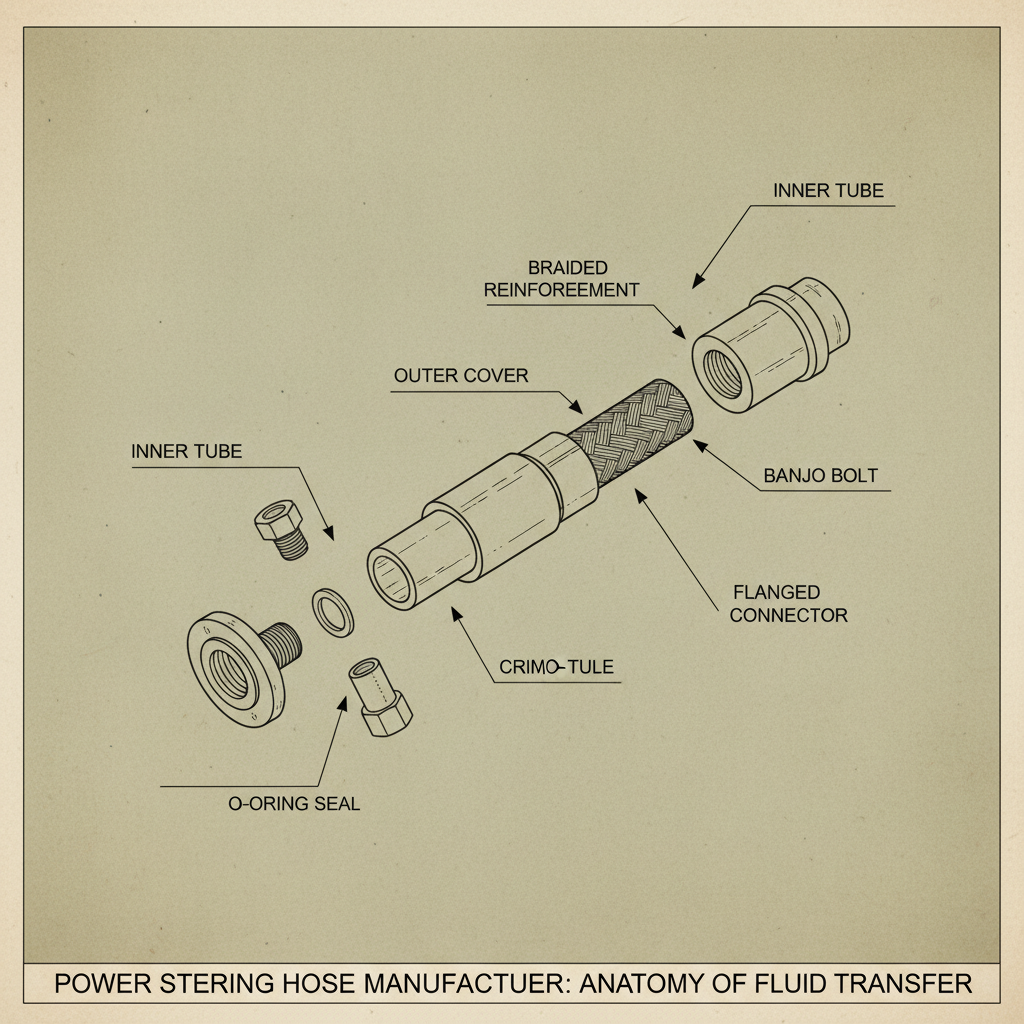
In simple technical terms, auto ac lines are the specialized hoses and pipes that form a closed-loop system for refrigerant circulation. They typically consist of an inner tube made of synthetic rubber (such as EPDM or AEM), a reinforcing layer of textile or steel wire to withstand high pressures, and an outer cover designed to resist abrasion, ozone, and heat.
Beyond mere piping, these components are engineered to handle extreme pressure fluctuations. During the compression cycle, the refrigerant exists as a high-pressure gas; as it moves through the lines toward the evaporator, it must remain contained without leaking, even under the constant vibration of a moving vehicle.
In the modern industrial context, these lines are not just accessories but are critical for driver safety and cognitive performance. By maintaining an optimal cabin temperature, they prevent driver fatigue and heatstroke, making the quality of the rubber fabrication a humanitarian consideration in regions with extreme heat.
Key Factors for High-Performance AC Hose Durability
The durability of auto ac lines is primarily governed by their material composition. High-grade synthetic rubbers are used to ensure that the hose can withstand the chemical aggressiveness of PAG oils and various refrigerants without swelling or softening over time.
Permeation resistance is another critical factor. Since refrigerants are small molecules, they can slowly migrate through the walls of the hose. Advanced auto ac lines utilize multi-layer barriers to ensure that the system remains charged for years, reducing the need for frequent refills and minimizing environmental leakage.
Finally, the mechanical strength provided by the reinforcement layer is vital. Whether using high-tensile polyester yarn or steel braiding, the reinforcement prevents the hose from expanding or bursting under the peak pressures generated by the AC compressor during high-load summer operation.
Global Applications and Commercial Use Cases
The application of auto ac lines extends far beyond standard passenger cars. In the commercial trucking industry, where vehicles operate for thousands of hours across diverse terrains, these lines must be exceptionally robust to avoid costly downtime. In logistics hubs across North America and Asia, the failure of a single AC line in a long-haul truck can lead to significant operational losses.
Furthermore, in specialized industrial vehicles used in remote mining zones or post-disaster relief operations, the cooling system is often the only way to keep sensitive onboard electronics from overheating. In these rugged environments, reinforced rubber lines are the only viable solution to withstand the constant vibration and debris impact characteristic of off-road use.
Performance Comparison of Auto AC Lines Materials
Long-Term Value and Reliability Benefits
Investing in premium auto ac lines provides tangible long-term value through the reduction of maintenance costs. Low-quality hoses often suffer from "dry rot" or ozone cracking, leading to slow refrigerant leaks that are difficult to diagnose and expensive to repair. High-quality lines, however, maintain their elasticity and seal integrity for the entire lifespan of the vehicle.
Beyond the financial logic, there is an emotional angle of trust and safety. A driver knows that their vehicle will perform reliably in the most grueling conditions, providing peace of mind during long family trips or critical commercial deliveries. This reliability fosters brand loyalty for automotive manufacturers and trust in the aftermarket parts supply chain.
Future Trends in Sustainable Refrigerant Transport
The future of auto ac lines is intrinsically linked to the "Green Revolution" in the automotive sector. As the industry moves toward carbon neutrality, we are seeing a shift toward biodegradable elastomers and recycled rubber compounds that do not sacrifice performance for sustainability.
Digital transformation is also playing a role. The integration of smart sensors within the AC line assembly—capable of detecting pressure drops or micro-leaks in real-time—is moving from a conceptual phase to practical application. This allows for predictive maintenance, where a driver is alerted to a failing line before it leads to a total system shutdown.
Furthermore, the rise of electric vehicles (EVs) is changing the layout of AC systems. Since there is no engine heat to contend with, but high-voltage battery cooling is essential, auto ac lines are being redesigned to integrate both cabin cooling and battery thermal management in a single, streamlined architecture.
Overcoming Engineering Challenges in AC Line Design
One of the most persistent challenges in designing auto ac lines is the conflict between flexibility and pressure resistance. A hose must be flexible enough to be routed through tight engine bays without kinking, yet strong enough to handle pressures exceeding 300 psi. Engineers solve this by optimizing the braid angle of the reinforcement layer.
Another hurdle is the thermal cycling effect. AC lines are subjected to rapid temperature swings—from freezing refrigerant flows to the intense heat of the engine compartment. This constant expansion and contraction can lead to fatigue failure at the crimped connection points.
The solution lies in advanced crimping technology and the use of hybrid materials. By combining the chemical resistance of fluoropolymers with the flexibility of rubber, manufacturers can create lines that are virtually immune to the most common failure modes encountered in the field.
Comparison of AC Line Design Specifications by Vehicle Class
| Vehicle Category |
Pressure Threshold |
Material Preference |
Lifespan Expectancy |
| Passenger Sedan |
Standard (150-250 psi) |
EPDM Rubber |
8-10 Years |
| Luxury SUV |
Medium (200-300 psi) |
AEM Elastomer |
10-12 Years |
| Heavy Duty Truck |
High (300-500 psi) |
Steel-Braided Rubber |
15+ Years |
| Electric Vehicle |
Variable (Low-High) |
Hybrid Composites |
12-15 Years |
| Off-Road Vehicle |
Extreme (High Impact) |
Reinforced Nitrile |
5-8 Years |
| Industrial Van |
Medium (200-300 psi) |
Standard AEM |
10 Years |
FAQS
It is recommended to perform a visual inspection of your auto ac lines at least once a year, ideally before the summer season. Look for signs of rubber cracking, oily residue (which indicates a refrigerant leak), or fraying in the reinforcement layer. A professional pressure test every two years is also advised to ensure the system is airtight.
While some technicians attempt to patch a leak, it is strongly discouraged for auto ac lines due to the high operating pressures. A patch is rarely as strong as the original bonded wall of the hose. Replacing the entire affected hose assembly ensures a factory-grade seal and prevents future failures in adjacent weakened sections.
Aluminum lines are rigid and ideal for fixed paths where vibration is minimal. Rubber lines (auto ac lines) are used where the hose must bridge the gap between a vibrating component (like the compressor) and a stationary one (like the condenser). Rubber absorbs the kinetic energy that would otherwise crack a rigid metal pipe.
Yes, absolutely. Different refrigerants and their associated lubricants (like PAG or POE oils) have different chemical properties. Some older rubbers may swell or degrade when exposed to modern R-1234yf refrigerants. Always ensure your replacement auto ac lines are certified for the specific refrigerant used in your vehicle.
A whistling sound often indicates a "micro-leak" or a restriction in the flow within the auto ac lines. As high-pressure gas is forced through a tiny opening or a partially collapsed hose, it creates a high-frequency sound. This should be addressed immediately to prevent the compressor from overheating due to insufficient refrigerant flow.
It depends on the manufacturer. High-quality aftermarket lines that adhere to ISO and SAE standards can be just as reliable as OEM. However, avoid "budget" options that lack proper reinforcement or use inferior rubber compounds, as they are significantly more prone to permeation and burst failure.
Conclusion
In summary, the integrity of auto ac lines is a cornerstone of vehicle thermal management, impacting everything from passenger comfort to environmental sustainability. By balancing material science—specifically in the realms of permeation resistance and pressure durability—with precise engineering, manufacturers can ensure that these critical components survive the harshest automotive environments.
As we move toward an era of electric mobility and eco-friendly refrigerants, the evolution of these conduits will continue to be a primary focus for the automotive industry. For those seeking the highest standards in rubber hose manufacturing and reliable AC system components, prioritizing certified, high-performance materials is the only way to guarantee long-term reliability. Visit our website for professional solutions: www.kemoautohose.com