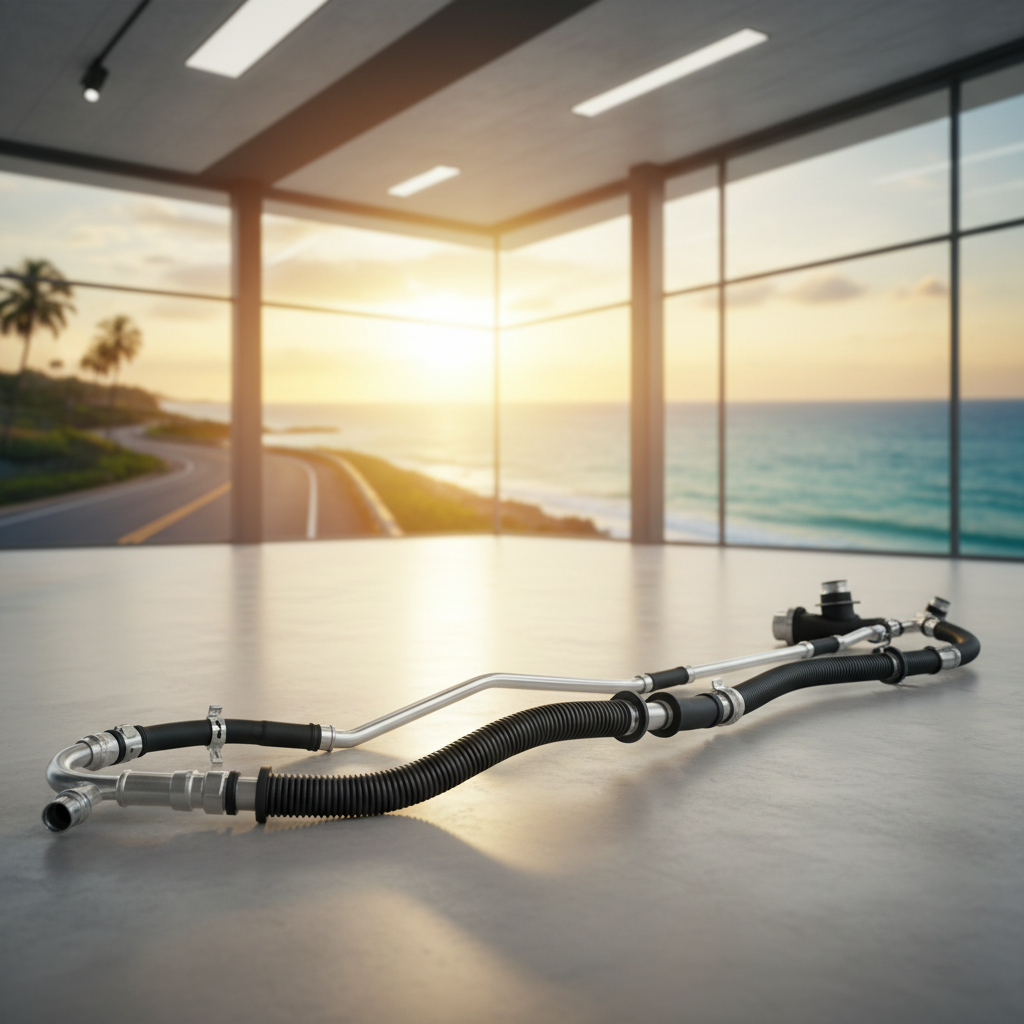
When modifying vehicle suspension or upgrading chassis components, the standard brake line length often becomes insufficient, leading to excessive tension or dangerous rubbing against moving parts. This is where custom extended brake lines become critical, providing the necessary reach to ensure the braking system remains functional and safe regardless of the vehicle's altered geometry. Whether for lifted trucks or specialized industrial machinery, extending these lines requires a precise balance of length and pressure retention.
The integrity of a braking system depends on the seamless transmission of hydraulic fluid from the master cylinder to the calipers. In the broader context of automotive rubber products, these specialized lines share a critical relationship with Brake Hose and Power Steering Hose systems, as all must withstand extreme pressure cycles and harsh environmental exposure. Failure to use a properly engineered extension can lead to fluid leakage or catastrophic brake failure, making the choice of materials and construction methods a primary safety concern for fleet managers and automotive engineers.
Understanding the technical requirements for these components allows buyers to move beyond generic replacements toward precision-engineered solutions. By analyzing the interaction between hose elasticity, reinforcement layers, and environmental resistance, we can determine the most reliable path for system integration. This guide explores the engineering logic behind custom extended brake lines, offering a technical framework for selection and procurement based on industrial safety standards.


Extended brake lines are more than just longer tubes; they are precision-engineered conduits designed to maintain hydraulic pressure without excessive expansion. The core structure typically consists of a high-grade synthetic rubber inner liner, a high-tensile textile or metallic braiding for reinforcement, and an outer weather-resistant cover. This multi-layer approach ensures that as the line extends, it does not "balloon" under pressure, which would otherwise result in a "spongy" brake pedal feel and increased stopping distances.
The physics of the extension involves calculating the maximum articulation of the suspension. An improperly sized line may be too short during full droop or too long, leading to interference with the tire or chassis. Therefore, custom lengths are derived from specific vehicle geometry, ensuring that the hose retains a natural arc. This prevents stress concentrations at the crimped fittings, which are the most common points of failure in low-quality extensions.
Material selection is the first line of defense against system failure. In professional automotive rubber manufacturing, the use of EPDM or NBR blends is common to ensure resistance to brake fluid, ozone, and temperature fluctuations. The inner liner must be chemically compatible with glycol-based or silicone-based fluids to prevent internal degradation, which could lead to liner collapse and blockage of the hydraulic flow.
The most critical technical factor is the safety factor ratio, typically maintained at 3:1 or higher. This means the burst pressure of the hose must be at least three times the maximum working pressure, ensuring that sudden pressure spikes during emergency braking do not compromise the hose wall integrity.
Beyond materials, the quality of the braiding process determines the hose's longitudinal stability. High-speed braiding machines ensure a consistent angle of reinforcement, which prevents the hose from twisting or kinking during installation. This mechanical stability is essential when the lines are extended, as any structural irregularity becomes a focal point for wear and tear over thousands of suspension cycles.
The primary value of custom extended lines lies in the elimination of chassis-induced stress. When a vehicle's ride height is increased, factory lines are often stretched to their limit. By installing a custom-length hose, the tension is removed from the fittings, significantly reducing the risk of fatigue cracking. This operational overhead translates directly into increased vehicle uptime and reduced emergency maintenance for commercial fleets.
Customization allows for the optimization of routing paths, reducing the number of bends and minimizing hydraulic resistance. This ensures that the braking response time remains consistent with OEM specifications, regardless of the modification level.
Furthermore, custom extensions provide the flexibility needed for specialized vehicle configurations, such as oversized wheel offsets or custom axle placements. By tailoring the length to the specific application, operators can ensure that the lines are protected from debris and road salt, which would otherwise accelerate the abrasion of a line that is poorly routed due to insufficient length.
Different rubber compounds offer varying levels of performance depending on the operating environment. For instance, hoses designed for extreme cold must maintain flexibility to avoid cracking, while those for heavy-duty industrial use focus on abrasion resistance. The interaction between the EPDM liner and the outer CR/NBR cover creates a composite that can withstand both internal chemical attack and external weather degradation.
When comparing these materials, the key metrics include working pressure limits, burst pressure, and thermal stability. High-tensile textile reinforcements allow for working pressures up to 10 bar in standard applications, though specialized heavy-duty lines can exceed this. The following data represents a relative performance comparison of common hose reinforcement types used in extended brake and fluid systems.
Custom extensions are indispensable in the modification of heavy-duty trucks and buses, where chassis extensions are common. In these scenarios, the lines must not only be longer but also more robust to handle the increased vibrations and debris encountered in off-road or industrial environments. The integration of these lines often involves routing them through protective conduits to prevent external punctures.
In the specialty automotive sector, such as custom 4x4 builds, extended lines are used to accommodate long-travel suspension. Here, the "droop" distance is the primary driver for length calculation. The hoses must be able to expand and contract without any binding, ensuring that the braking force is delivered instantly to the calipers even when the axle is at its maximum downward extension.
The industry is shifting toward smarter material composites that offer lower permeability and higher thermal resistance. We are seeing an increase in the use of advanced synthetic polymers that can withstand the more aggressive chemical compositions of next-generation brake fluids. These materials aim to extend the service life of the hose, reducing the frequency of replacement in high-mileage commercial vehicles.
Another trend is the movement toward more integrated assembly processes. By utilizing automatic extrusion and vulcanizing pots, manufacturers can achieve tighter tolerances in wall thickness, which minimizes the variance in hose expansion under pressure. This precision is vital for the emerging market of electronic braking systems where hydraulic consistency is paramount.
Finally, sustainability is driving the development of recyclable rubber compounds without sacrificing safety. The goal is to maintain the IATF16949 and DOT certifications while reducing the environmental footprint of the production process. This evolution ensures that high-performance automotive hoses remain compliant with tightening global environmental regulations.
The most frequent issue during the installation of extended lines is improper routing, which leads to premature wear. A line that is too long may sag and rub against the chassis, while one that is too short creates tension that can pull the fittings out of alignment. The solution is a systematic measurement of the "worst-case" suspension travel, adding a small percentage of slack to allow for natural movement.
Another challenge is the contamination of the hydraulic system during the replacement process. To mitigate this, professional installation requires a full system bleed to remove air bubbles that may have entered the lines. This is critical because air is compressible, and its presence in an extended line can significantly degrade braking performance and safety.
Compatibility between different hose types is also a common concern. When mixing custom extended lines with existing OEM components, it is essential to verify that the fittings and thread pitches are identical. Using adapters can introduce additional leak points, so custom-crimped ends that match the vehicle's specific hardware are always the preferred industrial solution.
| Factor | Standard Hose | Custom Extended | Critical Requirement |
|---|---|---|---|
| Length | Fixed OEM | Variable/Tailored | Full Droop Clearance |
| Tension | Neutral | Low-Stress Arc | No Fitting Strain |
| Material | Generic Rubber | Reinforced EPDM | Fluid Compatibility |
| Durability | Medium | High Abrasion Res. | Environmental Shield |
| Pressure | Standard | High-Burst Rated | 3:1 Safety Factor |
| Routing | Pre-defined | Optimized Path | Zero Chassis Rub |
Custom extended brake lines are specialized hydraulic hoses manufactured to a length longer than the factory original to accommodate vehicle modifications, such as suspension lifts or chassis extensions. They are designed to ensure that the braking system can operate without tension or interference throughout the full range of suspension movement, utilizing reinforced materials to maintain hydraulic pressure consistency.
The correct length is determined by measuring the distance between the fitting points when the suspension is at its maximum downward extension (full droop). You must add a small amount of slack to ensure the hose forms a natural arc rather than a straight line. This prevents stress on the crimped ends and ensures the hose does not rub against the frame or tires during articulation.
If the lines are engineered correctly with high-tensile reinforcement, there is no noticeable impact on braking distance. However, if low-quality, non-reinforced rubber is used, the hose may expand under pressure, leading to a "spongy" pedal and increased stopping distance. Professional-grade extensions use braiding to prevent this expansion, maintaining OEM-level braking response.
The best materials are synthetic rubber blends like EPDM or NBR, which provide excellent resistance to heat, ozone, and brake fluid. A high-quality hose will feature a multi-layer construction: a chemical-resistant inner liner, a high-strength textile or steel braid for pressure reinforcement, and a weather-resistant outer cover to protect against road debris and salt.
Absolutely not. Brake lines operate under significantly higher pressures than fuel or heater hoses. Using a hose not rated for hydraulic braking will lead to immediate failure or bursting under emergency braking conditions. Always use hoses specifically certified for brake applications, such as those meeting DOT or SAE standards, to ensure safety and system integrity.
Custom lines should be inspected during every oil change or suspension service. Key checks include looking for signs of outer cover abrasion, checking for cracks at the fitting crimps, and ensuring the routing hasn't shifted. Because modified vehicles often face harsher environments, quarterly visual inspections are recommended to identify wear before it leads to a leak.
Ensuring the reliability of a braking system after vehicle modification requires a technical approach to hose extension. By focusing on the critical balance of material compatibility, reinforcement strength, and precise length calculation, operators can maintain safety without compromising performance. Custom extended brake lines resolve the inherent tension of modified chassis, providing a necessary safety bridge between OEM components and customized vehicle geometries.
For those seeking professional-grade fluid transfer solutions, partnering with a manufacturer that adheres to strict quality systems like IATF16949 is essential. Whether you are managing a commercial fleet or engineering a specialty vehicle, you can find detailed technical specifications and procurement options at www.kemoautohose.com to ensure your braking system meets the highest industrial safety standards.